The case that teaches the truth – biology, design, and policy — not just “radiation protection”.
Watch the explainer video: TruthCase™ 11

TruthCase™ by RF SAFE · QuantaCase® A flip case that obeys physics, respects biology, and makes policy failure visible.

TruthCase™ (QuantaCase® by RF SAFE) is not just another “anti‑radiation case.” It is a training tool, a physics‑first product, and a conversation starter for the policy roadmap we now need to protect children and families.
The core message is simple and non‑negotiable:
  • You cannot buy your way out of wireless risk with marketing.
  • You can only reduce it with correct orientation, correct design, and correct policy.

TruthCase exists to teach all three.

Open full Usage Guide
Single product image. Theme‑aware CSS. Orientation, biology, and policy built into the layout.
0/5 TruthScore™ red flags · refuses loops, magnet sandwiches, and antenna‑detuning gimmicks.
Built to embody the S4–Mito–Spin framework — the reality that heart, brain, testis, immune cells, and blood are EMF hot zones.
TruthCase™ · QuantaCase®
Physics‑first hardware · Orientation trainer
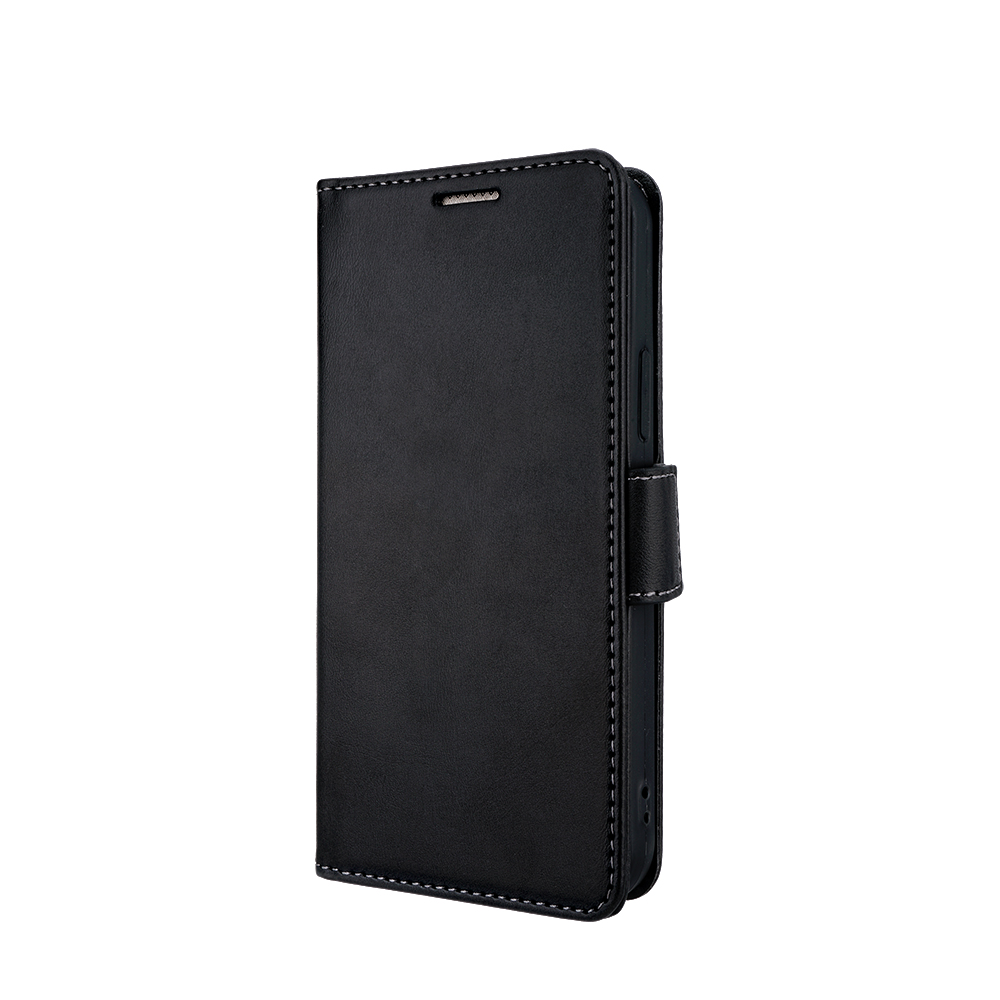
TruthCase™ QuantaCase® by RF SAFE — ultra‑thin flip case with directional shielding
Directional shielding where it matters — the flap sits between you and the phone’s most intense near‑field.
Ultra‑thin, antenna‑aware construction so the phone does not have to shout harder from inside the case.

What TruthCase™ really is

Learn more on “What TruthCase really is” — then dig into the three layers below.

TruthCase™ (QuantaCase® by RF SAFE) is not just another “anti‑radiation case.” It is three things at once:

Training tool

A training tool that teaches correct phone orientation and everyday habits that actually reduce dose.

Physics‑first product

A physics‑first product that refuses the hardware gimmicks that make many “radiation” cases worse, not better.

Policy proof‑of‑concept

A conversation starter and proof‑of‑concept for the policy roadmap we now need to protect children and families.

The core message is simple and non‑negotiable:

  • You cannot buy your way out of wireless risk with marketing.
  • You can only reduce it with correct orientation, correct design, and correct policy.

TruthCase exists to teach all three.

First principles: biology & physics

Use the tabs to slide through the problem, the S4–Mito–Spin biology, how phones manage power, everyday usage habits, and the red flags TruthCase is designed to avoid.

The problem in one paragraph

There are three layers to the EMF problem:

At the biological layer, non‑thermal RF/ELF fields are interacting with very specific parts of cells – voltage sensors, energy/ROS engines, and spin‑sensitive redox systems – in ways that explain why heart, brain, testis, immune system, and blood keep showing up as hotspots. That is the S4–Mito–Spin story.

At the product layer, many “anti‑radiation” cases add metal loops, detachable magnet plates, and big unshielded ear‑side holes that detune antennas, provoke phones to transmit harder, and leak exactly where protection is needed most.

At the policy layer, we are still living under 1990s, heat‑only limits. Section 704 gagged local health concerns. Public Law 90‑602 (EPRC) – which requires HHS to run a real electronic‑product radiation program – sits largely unenforced while the FCC, a spectrum agency, is left pretending to regulate health.

TruthCase is designed to sit at the intersection of all three: it respects the biology, obeys the physics, and makes the policy failure visible.

First principles: how EMFs actually talk to the body

TruthCase is built around a simple scientific insight: Weak RF/ELF fields do not act “everywhere, equally.” They act where cells have parts that can actually hear those fields and amplify the signal.

The S4–Mito–Spin framework identifies three such parts:

  • Voltage sensors (S4) in ion channels – These tiny charged segments sit in many voltage‑gated channels (especially Ca²⁺ and Na⁺ channels). Pulsed, polarized fields can introduce timing noise into them. Tissues loaded with these sensors and dependent on precise timing — heart conduction systems, brain circuits, hormone‑secreting Leydig cells, T cells — are obvious targets.
  • Energy and ROS engines (mitochondria and NADPH oxidases) – Mitochondria and NOX translate distorted calcium timing into bursts of reactive oxygen species (ROS). Where these engines are dense and antioxidant buffers are limited, small disturbances in timing become large oxidative‑stress events over time. That is why testis, heart, and brain consistently look more sensitive than, say, low‑mitochondria tissues.
  • Spin‑sensitive redox cofactors (heme and flavin) – Red blood cells, NOX complexes, and clock proteins like cryptochrome are packed with heme and flavin. Their chemistry often runs through radical‑pair intermediates whose electron spins are sensitive to weak fields. This gives EMFs a way to nudge redox balance and membrane charge even in cells without S4 channels or mitochondria.

Once you look at the body through this lens, the patchwork of EMF findings becomes structured:

  • Heart and brain tumours → high S4, high mitochondria.
  • Male infertility → high S4, high mitochondria in Leydig and germ cells.
  • Immune drift → S4 + ROS engines in T cells and microglia.
  • Red blood cell zeta‑potential collapse and rouleaux → pure heme/flavin spin chemistry.
  • Clean nulls in some skin‑cell and low‑density systems → exactly what you expect when those three parts are sparse or exposure is off‑window.

TruthCase does not ask you to accept that framework on faith. It embodies it in hardware and usage.

Deeper dive on S4–Mito–Spin: S4–Mito–Spin / CEA pathway explainer .

First principles: how phones manage power (and how cases can help or hurt)

Modern phones constantly adjust their uplink power to stay connected. Two facts follow:

  • If you help the phone – by keeping antennas efficient and giving it clean paths to the network – it can do its job with less transmit power.
  • If you hurt the phone – by detuning antennas with metal hardware, sandwiching it between magnets, plates and shielding, or blocking the wrong directions – it will ramp up power and shout louder next to your body.

This is the piece most anti‑radiation marketing quietly ignores.

The FTC has explicitly warned that products which interfere with a phone’s signal can cause it to draw more power and emit more radiation. That is not a theory; it is how cellular power control works.

When you put a phone in a case, you are not just adding “shielding.” You are changing the RF environment that its antennas see. If you get that wrong, the phone simply transmits harder from inside your case.

TruthCase is built to avoid that trap.

Orientation training: what TruthCase teaches

The most important “feature” of TruthCase is not something you can touch. It is the habits it trains. Every time you use it, the hardware reinforces four simple rules:

  • During calls, the shield goes between your head and the phone. Answer or place the call, then close the flap toward your head.
  • In pockets, the shield faces your body (often back pocket is best). You are training your body to expect that posture.
  • When texting or scrolling, you fold the flap behind the phone so the shield sits between your hand and the handset; you keep distance from the rest of your body.
  • At night, you learn that distance and airplane mode are worth more than any case. The hardware is a reminder, not a substitute.

KPIX‑5 (CBS San Francisco) quietly proved why this matters: in real‑use tests, flip cases dropped outgoing RF from the face of the phone by about 85–90% — when the flap was closed. They also found RF SAFE was the only brand whose packaging explicitly told users to close the cover during calls.

That is the TruthCase philosophy: Design that makes correct orientation obvious, and packaging that says the quiet part out loud.

Full step‑by‑step instructions: TruthCase Usage Guide .

The red flags: how many “anti‑radiation” cases go wrong

Over and over, the same design mistakes appear in the “radiation protection” market. They all violate basic RF engineering:

  • Metal loops near antenna regions – Metal strap loops or decorative metal near the edges of the phone — where antennas often live — detune and distort the radiation pattern. The result can be more power and less predictable field distribution around your head or body.
  • Detachable anti‑radiation cases with metal and magnets – Many wallet‑style and detachable “anti‑radiation” cases use a design that sandwiches the phone between: the handset, a magnet/steel plate mounting system, and a shielded outer piece. That stack of conductive and magnetic material near the frame is a perfect recipe for antenna detuning and link degradation. The phone responds by ramping up uplink power right next to the user.
  • Large unshielded ear‑side openings – Many flip cases have a big cut‑out at the earpiece. It is convenient for audio, terrible for shielding. At today’s bands, the largest aperture dominates leakage. A large ear‑aligned hole is basically an RF bullseye for exactly the part of the head you are trying to protect.
  • Thick, multi‑layer wallet stacks near the antenna – Heavy card stacks, extra layers, and bulky constructions near antenna zones change the RF environment and may provoke power increases. Any thick sandwich of materials in front of radiating surfaces is a problem.
  • “99% protection” claims without whole‑device tests – A fabric swatch that blocks “99%” in a lab does not mean your phone‑in‑use exposure is reduced by 99%. If the case is not tested with a live phone, in normal positions, across bands, and if it does not train orientation, the number is marketing, not safety.

Those are the red flags TruthCase is explicitly designed to avoid — and to teach you to recognize.

See the interactive Red Flag Slider for a visual walk‑through of these failure patterns.

TruthScore™ · the five‑red‑flag test

A simple checklist you can use to evaluate any “anti‑radiation” case — including ours.

The five red flags

TruthCase teaches you how to evaluate any “anti‑radiation” case — including ours — with a simple checklist. Give a case one point for each of these red flags:

  1. Metal strap loops or decorative metal near phone edges.
  2. Detachable design that sandwiches the phone between magnets, steel plates, and shielding.
  3. Large unshielded ear‑side speaker opening.
  4. Thick, multi‑layer wallet stack near antenna regions.
  5. “Up to 99% protection” claims without whole‑device, orientation‑specific tests.

If the score is:

  • 0/5 → acceptable from a first‑principles standpoint.
  • 1–5 → walk away.

Those are the red flags TruthCase is explicitly designed to avoid — and to teach you to recognize. See the interactive Red Flag Slider for visual examples of each failure mode.

TruthCase is built to score:

0/5 red flags

No loops, no detachable magnet sandwiches, no large unshielded ear‑side opening, no thick wallet stack in antenna zones, and no “99%” fabric‑only marketing without whole‑device, orientation‑specific testing.

The same checklist that makes us accountable makes it easier for consumers, schools, and clinicians to demand better from the entire category.

What TruthCase™ does differently

TruthCase is QuantaCase designed to obey first principles and to score 0/5 on the TruthScore™ red‑flag test.

TruthCase is QuantaCase designed to obey these first principles:

No metal loops

No metal strap loops or decorative metal near antenna edges. We refuse hardware that looks premium but risks detuning.

No detachable magnet/plate sandwich

TruthCase is a single, non‑detachable assembly. There are no magnets or steel plates between phone and shielded flap. We do not “sandwich” the phone between conductive components that undermine antenna performance.

Directional shielding where it matters

The front flap contains a continuous conductive layer. When you close it toward your head or body, it sits between you and the phone’s most intense near‑field. Shield the person, not the phone.

Shielded ear‑side aperture

Where many cases simply cut a big hole, TruthCase uses a conductive mesh at the ear‑side opening, maintaining shielding continuity across the flap while letting audio through. No big unshielded gap by your ear.

Ultra‑thin, antenna‑aware construction

The case is deliberately thin near antenna zones. We are not building armor; we are avoiding detuning so the phone does not have to shout.

One RFID‑blocking slot

A single slot keeps the shield flat and minimizes card‑stack bulk. Thick, multi‑slot wallets make correct orientation harder and add the very bulk that can compromise antenna behavior.

Side latch and secure grip

The side latch keeps the flap aligned and helps keep fingers away from antenna zones during use, instead of squeezing metallic hardware against the frame.

Built‑in stand for distance

Simple, landscape stand function encourages you to put the phone on a table and step back during streaming or video calls — the easiest way to reduce dose.

User‑verifiable shielding

TruthCase exposes a point on the shield layer at the ear‑side opening so you can check continuity with a basic ohmmeter. If you cannot measure the shield, you are taking the manufacturer’s word for it; we prefer proof.

Usage Guide & everyday training

TruthCase is hardware that quietly retrains how you carry and use your phone — and points you back to first‑principles safety.

Everyday orientation rules

Every time you use TruthCase, it reinforces four simple rules:

  • During calls, the shield goes between your head and the phone. Answer or place the call, then close the flap toward your head.
  • In pockets, the shield faces your body (often back pocket is best). You are training your body to expect that posture.
  • When texting or scrolling, you fold the flap behind the phone so the shield sits between your hand and the handset; you keep distance from the rest of your body.
  • At night, distance and airplane mode matter more than any case. The hardware is a reminder, not a substitute.

KPIX‑5 (CBS San Francisco) found that in real‑use tests, flip cases dropped outgoing RF from the face of the phone by about 85–90% — when the flap was closed — and that RF SAFE was the only brand whose packaging explicitly told users to close the cover during calls.

Full TruthCase Usage Guide

For a complete walkthrough of setup, positioning, everyday use, and demonstrations, open the full Usage Guide:

https://www.rfsafe.com/class/user-guide/

TruthCase is honest about its scope:

  • A case can reduce exposure only when it is designed and used correctly.
  • It cannot fix 1990s limits, it cannot repeal Section 704, and it cannot enforce Public Law 90‑602. That is policy work.

What it can do is:

  • Protect families today when phone‑in‑hand is unavoidable.
  • Teach the physics and biology behind that protection.
  • Give parents, schools, and lawmakers a concrete example of what “first‑principles safety” looks like in hardware.

How TruthCase connects product, biology, and policy

TruthCase is a bridge, not an endpoint — anchoring hardware design in biology, then pointing to the policy work that still needs to be done.

TruthCase is a bridge, not an endpoint.

Product & biology levels

At the product level, it answers:

  • How do we design a case that lowers near‑body exposure without making the phone transmit harder?
  • How do we teach orientation in a way people actually remember?

At the biological level, it takes the S4–Mito–Spin reality seriously:

S4–Mito–Spin / CEA explainer

  • Different tissues are not equally sensitive; heart, brain, testis, immune cells, and blood are built in ways that make them EMF hot zones.
  • Red blood cell zeta‑potential collapse and rouleaux fit naturally into the spin‑chemistry part of the model.
  • Clean nulls in low‑density tissues are expected and do not rescue a heat‑only narrative.

Policy level & Action Hub

At the policy level, TruthCase makes the gap visible:

Action Hub: https://www.rfsafe.com/class/action/

  • Section 704 of the Telecom Act still blocks local communities from considering health in antenna siting even after a federal court called the FCC’s treatment of non‑thermal effects “arbitrary and capricious.”
  • Public Law 90‑602 still mandates that HHS run an electronic‑product radiation control program — research and performance standards for electronic products — but the real RF program has been effectively mothballed.
  • The FCC remains a spectrum and equipment‑authorization agency, not a health agency, yet it continues to be treated as the de facto health regulator for RF.

RF SAFE’s position is direct:

  • Section 704 must be repealed or fundamentally re‑written so communities can protect children and schools.
  • HHS must get back into compliance with Public Law 90‑602 and execute a real RF research and standards program, with EPA, FDA, and NIH at the table.
  • The FCC should handle spectrum and equipment authorization. RF health oversight belongs with public‑health agencies.
  • Indoors, especially for children, we should be moving high‑bandwidth payloads off microwaves and onto light — LiFi (IEEE 802.11bb) and wired networks — with RF reserved for mobility.

TruthCase is honest about its scope

TruthCase is honest about its scope:

  • A case can reduce exposure only when it is designed and used correctly.
  • It cannot fix 1990s limits, it cannot repeal Section 704, and it cannot enforce Public Law 90‑602. That is policy work.

What it can do is:

  • Protect families today when phone‑in‑hand is unavoidable.
  • Teach the physics and biology behind that protection.
  • Give parents, schools, and lawmakers a concrete example of what “first‑principles safety” looks like in hardware.

The TruthCase promise

A hardware promise anchored in first principles — and in the policy roadmap our children actually need.

Four promises we make

TruthCase makes four promises:

  • We will not add loops, magnets, plates, thickness, or gimmicks that help marketing while hurting antenna integrity.
  • We will always tell you that orientation and duty cycle matter more than brand names.
  • We will root our design in the real biology — the S4–Mito–Spin reality of tissue‑specific vulnerability and red‑blood‑cell behaviour.
  • We will keep pushing for the policy roadmap — fixing Section 704, enforcing Public Law 90‑602, moving indoors toward light — that finally aligns the wireless environment with what our cells can safely tolerate.

The case you hold in your hand is not the end of the story. It is the starting point:

  • For families to retrain how they carry and use devices.
  • For schools and clinicians to talk plainly about risk and mitigation.
  • For legislators to see that practical, physics‑consistent safety is possible — and overdue.

TruthCase™ exists to teach that truth.